
What Is Overpronation?
What Is Overpronation?
Overpronation is excessive inward rolling of the foot during the stance phase of walking or running. A small degree of pronation is normal — it is the foot's natural shock absorption mechanism. Overpronation occurs when this inward roll exceeds the optimal range, placing abnormal stress on the foot, ankle, knee, hip, and lower back. It is one of the most common biomechanical abnormalities seen in physiotherapy practice.
Normal Pronation vs Overpronation
When your heel strikes the ground, the foot naturally rolls inward approximately 15 degrees. This distributes impact force across a wider area of the foot and allows the ankle and foot to absorb shock efficiently. In overpronation, this inward roll exceeds 15 degrees. The arch collapses further than it should, and the foot remains pronated for too long — failing to supinate in preparation for push-off.
How to Identify Overpronation
Signs include excessive wear on the inner (medial) heel and forefoot of your shoes, ankles that tilt inward when standing barefoot, an arch that appears to flatten when standing, and knees that angle inward (valgus) during standing or walking. A formal gait analysis by a physiotherapist provides precise assessment.
What Problems Does Overpronation Cause?
Plantar fasciitis (the most direct consequence), medial tibial stress syndrome ("shin splints"), patellofemoral pain (kneecap tracking problems), Achilles tendinopathy, and lower back pain from compensatory lumbar loading.
Treating Overpronation
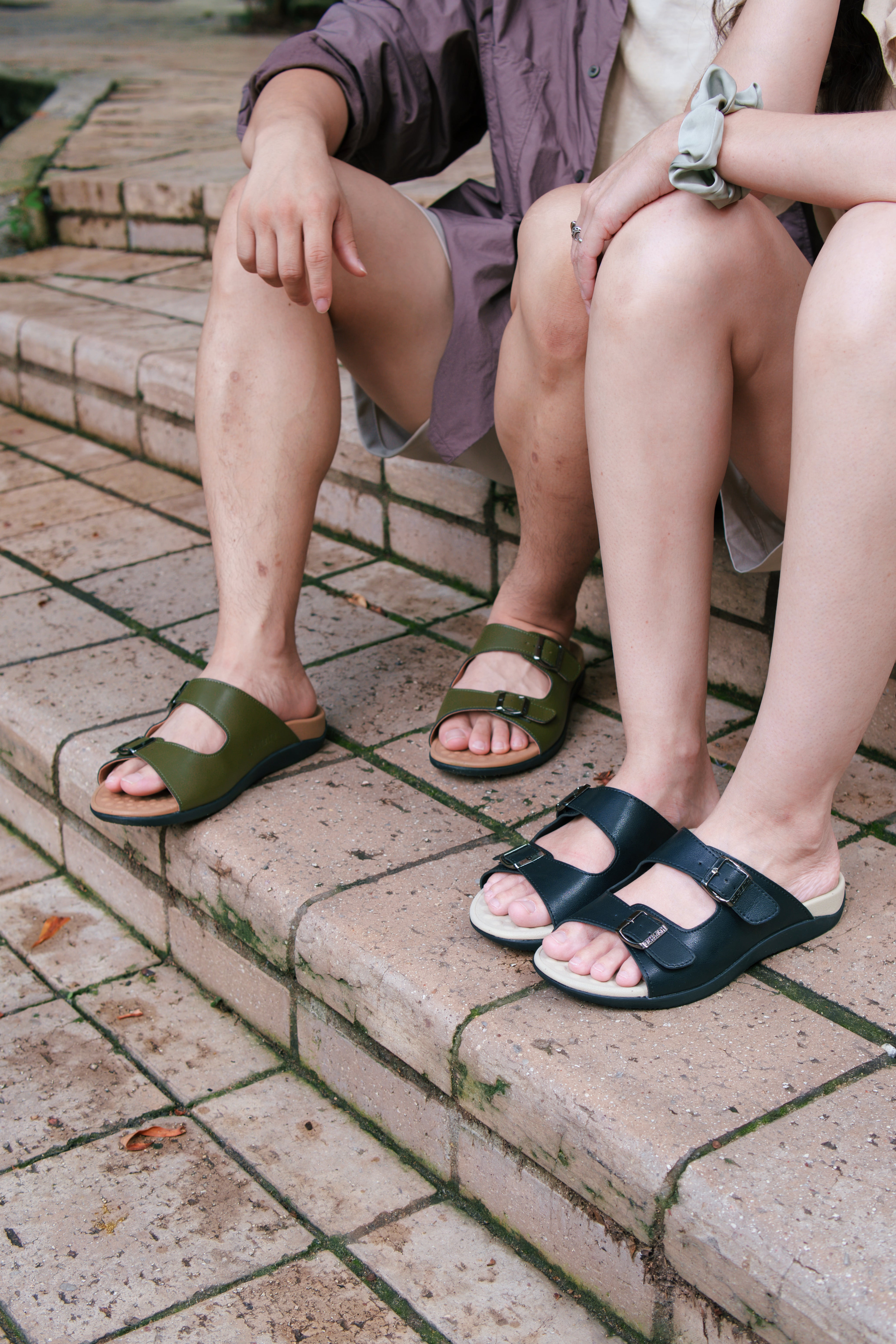
Physiotherapy management combines passive support through appropriate footwear and arch support, and active correction through strengthening of hip abductors, gluteal muscles, and foot intrinsic muscles. OZHealth PosturArch sandals are designed with a medial arch profile that controls pronation during the stance phase. Hip and gluteal strengthening exercises (single-leg squats, clamshells, lateral band walks) reduce tibial rotation forces that drive overpronation from above.
Frequently Asked Questions
Is overpronation the same as flat feet?
Not exactly. Flat feet describe the structural appearance of the arch, while overpronation describes the movement pattern during gait. Many people with flat feet overpronate, but you can overpronate with an apparently normal arch, and some people with flat feet do not overpronate significantly.
Can overpronation be corrected permanently?
Structural flat feet that drive overpronation cannot be corrected without surgery. However, the functional impact can be significantly reduced through consistent arch support use and strengthening of the hip and foot muscles that control pronation mechanics.
Article reviewed by Shazleena Binti Kasirin, Physiotherapist. Published by OZHealth by Trimax Healthcare Sdn Bhd.