
What Are Heel Spurs and How Do You Treat Them?
What Are Heel Spurs and How Do You Treat Them?
Short answer: A heel spur is a calcium deposit forming a bony protrusion on the underside of the heel bone (calcaneus). Heel spurs themselves are often painless — it is the surrounding tissue inflammation (plantar fasciitis) that causes pain. Treatment focuses on reducing inflammation and mechanical stress, not removing the spur itself.
What Causes Heel Spurs?
Heel spurs develop as a response to repeated stress on the heel bone where the plantar fascia or flexor muscles attach. When these tissues are repeatedly strained — due to flat feet, tight calf muscles, obesity, or prolonged standing — the body deposits calcium at the attachment point as a protective response. Over months to years, this calcium deposit forms a spur visible on X-ray.
Heel spurs are extremely common in Malaysia — estimated to affect 10–15% of Malaysians over 40. Risk factors particularly relevant here include: high body weight in an increasingly sedentary population, flat foot prevalence in Asian foot anatomy, and extended time standing on hard tile floors without adequate footwear.
Do Heel Spurs Always Cause Pain?
No. Up to 70% of heel spurs identified on X-ray are asymptomatic — the patient has no pain despite the spur being present. When pain does occur, it is typically from co-existing plantar fasciitis (inflammation of the plantar fascia near the spur) rather than the spur itself. This is why treatment targets the inflammation and biomechanical cause, not the spur.
Diagnosis
Heel spurs are diagnosed by X-ray. Characteristic sharp morning heel pain (worst with the first steps after rest), tenderness along the plantar fascia, and pain that eases after walking a few minutes are the clinical signs. Not all heel pain is from heel spurs — differential diagnosis includes Achilles tendonitis, fat pad syndrome, and tarsal tunnel syndrome.
Treatment for Heel Spurs in Malaysia
First line: Arch support footwear with a deep heel cup (immediately reduces plantar fascia stress), daily stretching (plantar fascia and calf stretches), and NSAIDs for acute pain.
Second line: Physiotherapy, corticosteroid injection (temporary relief, not curative), night splints to maintain plantar fascia stretch during sleep.
Third line: Extracorporeal shock wave therapy (ESWT) — highly effective for chronic cases, available at sports medicine clinics in KL, Penang, and Johor Bahru.
Surgery: Heel spur removal surgery is considered only after 12+ months of failed conservative treatment and in less than 5% of cases. The spur can regrow, and surgery carries risks — making conservative management always preferable.
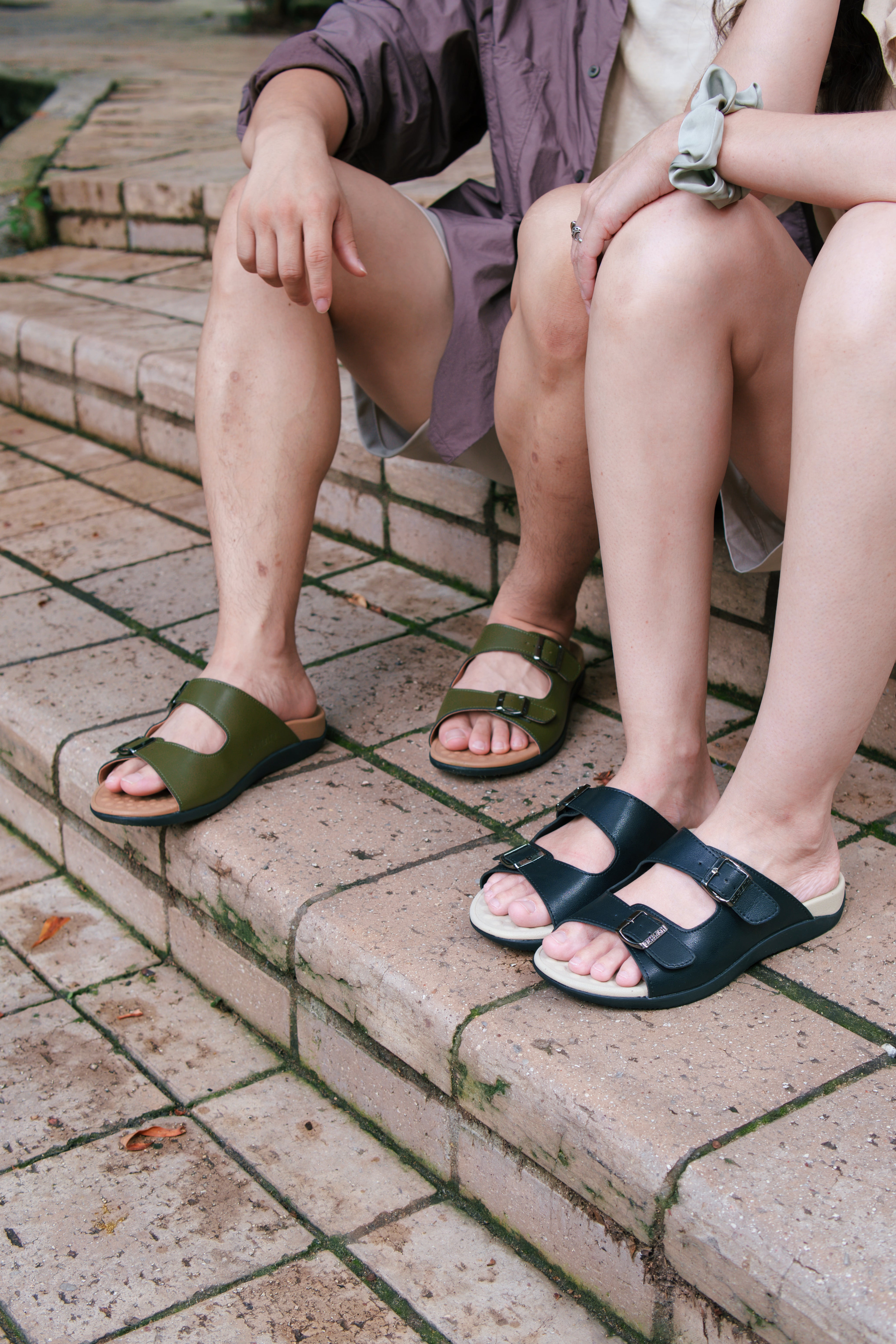
The OZHealth PosturArch sandal addresses heel spurs by combining a 22mm deep heel cup (containing the heel fat pad and reducing spur irritation) with medial arch support (reducing plantar fascia tension at the spur attachment point).