
How Do I Know If I Need Arch Support?
How Do I Know If I Need Arch Support?
Short answer: You likely need arch support if you have: persistent heel or arch pain, flat feet confirmed by the wet footprint test, pain that is worse in the morning or after rest (classic plantar fasciitis), fatigue in the feet or legs after moderate standing or walking, or knee/hip/back pain that has no identified cause. Arch support is one of the most cost-effective and accessible interventions for musculoskeletal pain in the lower limb.
Signs You May Need Arch Support
Morning heel pain: The hallmark symptom of plantar fasciitis — sharp pain with the first steps in the morning that eases after 5–10 minutes. This occurs because the plantar fascia contracts overnight and is suddenly stressed with weight-bearing. Arch support reduces this daily morning stress cycle.
Foot fatigue after moderate activity: If your feet feel exhausted after activities that do not seem excessive — a 30-minute walk, a normal day at work — the foot muscles and fascia are working harder than they should because they are not supported. Arch support reduces the muscular effort required to maintain arch integrity.
Shoe wear pattern: Look at the soles of your worn shoes. Heavy wear on the inner heel and ball of foot indicates overpronation. Heavy wear on the outer edge suggests supination. Either pattern benefits from arch support appropriate for the foot type.
Flat feet confirmed by footprint test: If your wet footprint shows the full inner edge of the foot (no arch curve), you have flat feet and will almost certainly benefit from medial arch support.
Inward-rolling ankles when walking: Visible inward ankle rolling (or "caving in") during walking or standing is overpronation — a clear indicator for arch support.
How to Do the Wet Footprint Test at Home
Wet the sole of your foot and step onto a piece of cardboard or brown paper. Step off and examine the footprint:
- Full footprint (entire inner edge visible): Flat feet — needs medial arch support
- Moderate footprint (about half the arch visible): Neutral arch — may benefit from mild support
- Thin or no connection between heel and forefoot: High arch — needs cushioning and flexibility, not aggressive arch support
Who Benefits Most from Arch Support
High-benefit groups: People with flat feet (highest priority), plantar fasciitis sufferers, those who stand 4+ hours daily, pregnant women (hormonal laxity flattens arches temporarily), runners and active walkers, people with knee or hip pain linked to foot mechanics, office workers who commute on foot.
Moderate benefit: People with neutral arches who stand for long periods, those with mild foot fatigue, older adults with age-related arch flattening.
Lower priority: People with high arches (need cushioning more than support), children under 3 (the arch is still developing — most children do not need arch support).
Starting Arch Support: Practical Tips
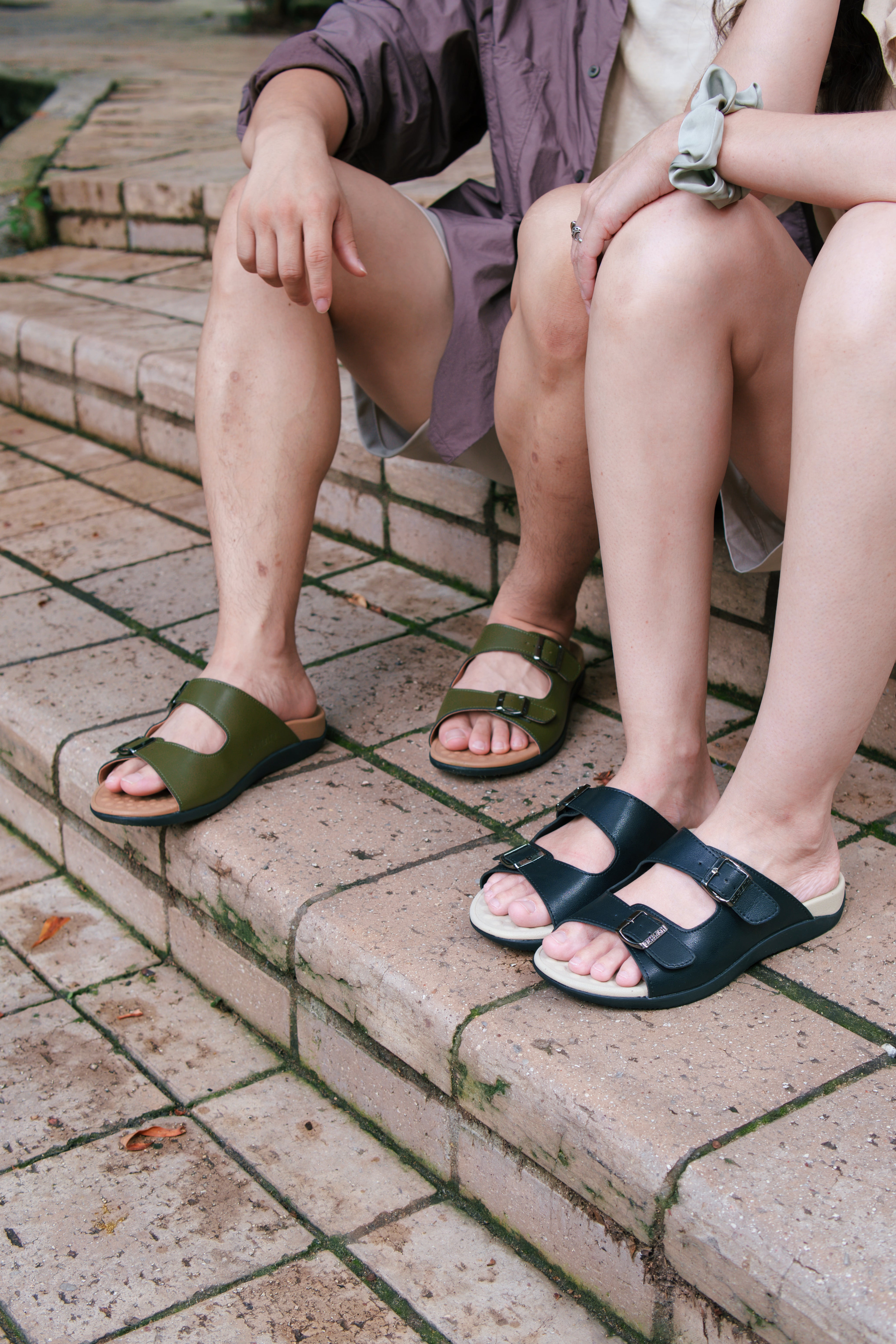
New arch support can feel uncomfortable for the first 1–2 weeks as the foot adapts. Start with 2–3 hours of wear per day, increasing gradually. If pain increases after 4 weeks of consistent use, the arch support may not be the correct type for your foot — consult a podiatrist. OZHealth PosturArch sandals are suitable for gradual introduction at home — start with wearing them for home use and assess foot response over 2–3 weeks before committing to full daily use.