
Does Footwear Affect Back Pain? The Kinetic Chain Explained
Does Footwear Affect Back Pain? The Kinetic Chain Explained
Short answer: Yes — poor footwear is a clinically significant contributor to lower back pain. Through the kinetic chain, abnormal foot mechanics (particularly overpronation from flat feet) cause compensatory changes in the knee, hip, pelvis, and lumbar spine. Correcting foot posture with arch support frequently reduces back pain, sometimes dramatically, without spinal treatment.
What Is the Kinetic Chain?
The kinetic chain is a concept in biomechanics describing how the body's joints and muscles function as an interconnected system. A dysfunction at one joint creates compensatory stresses at others. The foot is the foundation of the kinetic chain — every postural and movement deviation originating at the foot is amplified up through the ankle, knee, hip, and spine.
Think of it like a building: if the foundation is misaligned, the entire structure above is affected. Your spine is the building; your feet are the foundation.
How Flat Feet and Overpronation Cause Back Pain
When the foot overpronates (rolls inward due to flat arch), the following cascade occurs:
- The tibia (shin bone) internally rotates with the pronating foot
- Internal tibial rotation pulls the knee into a valgus (knock-knee) position
- Knee valgus causes the femur to internally rotate
- Femoral rotation tilts the pelvis — typically anteriorly (forward)
- Anterior pelvic tilt increases lumbar lordosis (lower back arch)
- Excessive lumbar lordosis compresses the posterior facet joints and increases disc pressure
This is not theoretical — it is observable on gait analysis and is one of the first things I assess when a patient presents with chronic lower back pain. Approximately 30–40% of my back pain patients show contributing factors from foot mechanics.
Clinical Evidence
Multiple studies have demonstrated the foot-spine connection. A 2016 randomised controlled trial found that patients with chronic low back pain who received orthotic arch support showed significant reduction in lumbar pain at 3-month follow-up. A 2020 systematic review confirmed that foot orthoses provide measurable benefit for a subgroup of back pain patients, particularly those with pronated foot type.
High Heels and the Lumbar Spine
High heels (above 5cm) shift the body's centre of mass forward, forcing the lumbar spine into compensatory hyperextension. This compresses the posterior lumbar facet joints and stretches the anterior lumbar ligaments simultaneously. Long-term high heel use is associated with increased posterior disc degeneration and facet joint arthritis — findings I see regularly in my chiropractic practice in women who have worn heels for 20+ years.
The Role of Arch Support in Back Pain Management
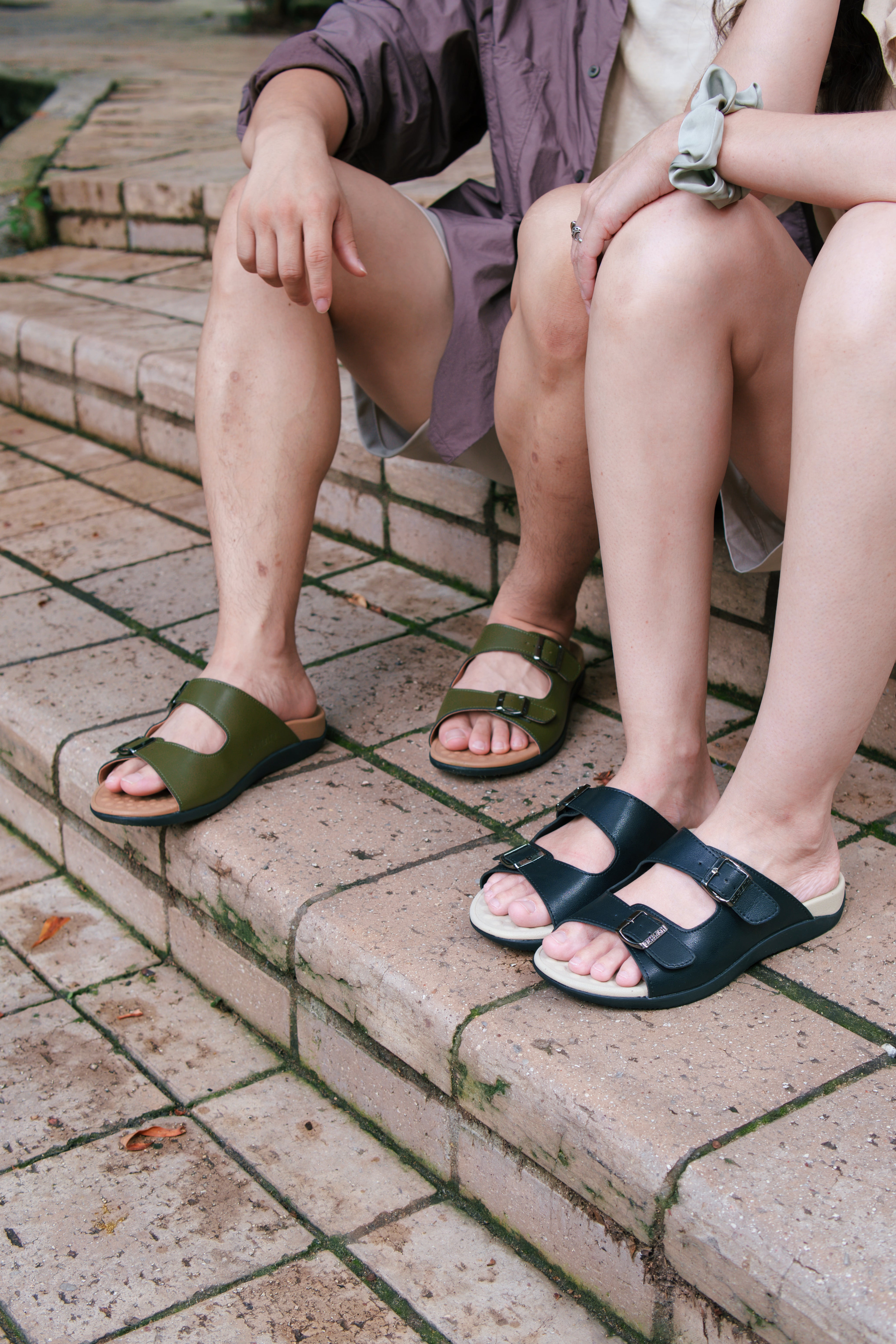
For patients with back pain attributable to foot pronation, orthotic arch support is one of the most efficient interventions available. Unlike spinal manipulation or physiotherapy (which address symptoms), correcting the foot mechanics addresses the root biomechanical cause. OZHealth PosturArch sandals are designed to control pronation, stabilise the heel, and reduce the kinetic chain compensations that travel from foot to spine.
I routinely recommend orthotic footwear for home use alongside chiropractic care — because even the best spinal treatment cannot fully hold its effect if the patient spends 4–6 hours daily in unsupported footwear on hard floors.