
Can Flat Feet Be Corrected in Adults?
Can Flat Feet Be Corrected in Adults?
Short answer: Structural flat feet in adults cannot be "corrected" in the sense of raising the arch permanently without surgery. However, the pain, posture problems, and biomechanical dysfunction caused by flat feet can be almost fully managed through consistent arch support, targeted foot strengthening exercises, and appropriate footwear.
Understanding Adult Flat Feet
Flat feet (pes planus) in adults fall into two categories: rigid flat feet — where the arch never developed and the foot remains flat regardless of weight-bearing position — and flexible flat feet — where an arch exists when non-weight-bearing but collapses when standing. Most adult Malaysians with flat feet have the flexible type.
By adulthood, the foot bones, ligaments, and tendons have fully matured. Structural remodelling without surgery is not possible. The goal of treatment is functional management — reducing pain, improving alignment, and preventing the cascading effects on knees, hips, and lower back.
What Can Be Achieved Without Surgery
Pain elimination: Most patients with flat feet achieve complete pain relief with proper arch support and footwear. The pain from flat feet is not from the flatness itself but from the excessive strain on the plantar fascia, tibialis posterior tendon, and medial ankle structures.
Gait improvement: Orthotic support reduces overpronation (inward rolling), which improves gait mechanics and reduces strain on the knee and hip.
Prevention of further collapse: Without support, flexible flat feet can progress to adult-acquired flatfoot deformity — a painful condition involving tibialis posterior tendon dysfunction. Consistent arch support arrests this progression.
Functional arch activation: Targeted exercises (towel scrunches, single-leg heel raises, short foot exercise) strengthen the intrinsic foot muscles and can partially improve arch function in flexible flat feet over 6–12 months.
Do Arch Support Sandals Work for Flat Feet?
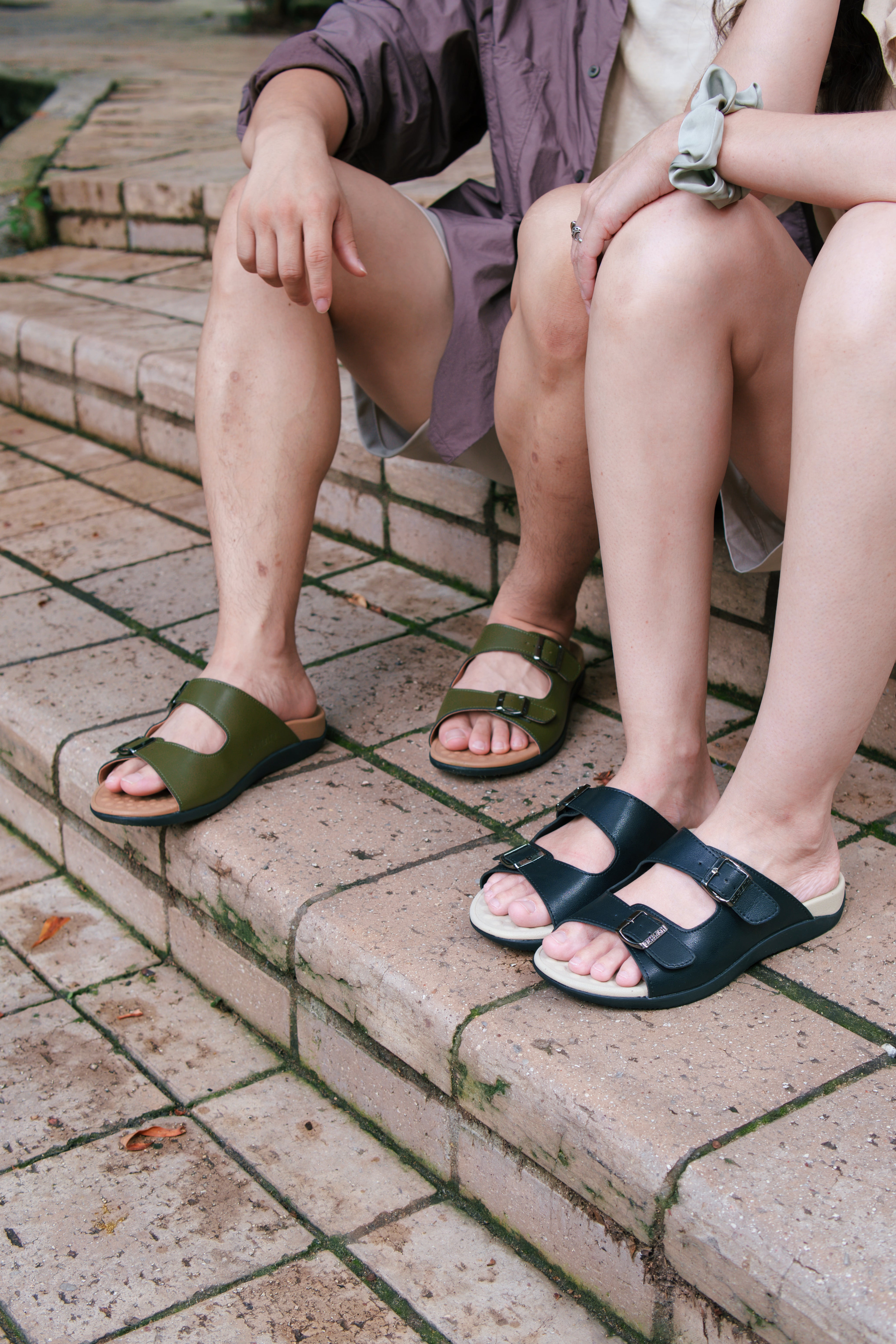
Yes — and they are often more practical than custom orthotics for daily Malaysian life. Custom orthotics require closed shoes, but most Malaysians wear sandals at home, in casual settings, and even some workplaces. An orthotic sandal like OZHealth PosturArch provides continuous arch support across all those environments without requiring a separate insert.
The key feature for flat feet specifically is the height and shape of the medial arch contour. It must contact the arch — not just be present — which requires proper fit. Sandals sized too large lose this contact.
When Is Surgery Considered?
Surgery for flat feet is only considered in: (1) severe rigid flat feet causing debilitating pain unresponsive to conservative treatment, (2) adult-acquired flatfoot deformity with tibialis posterior tendon rupture, or (3) when conservative treatment fails after 6+ months. The majority of flat-footed adults — even those with significant deformity — never require surgery.
Malaysian Prevalence
Studies on Asian populations suggest a significantly higher prevalence of flat feet compared to Western populations — estimated at 25–40% in Malaysian adults. Contributing factors include genetic predisposition in Southeast Asian foot anatomy, childhood barefoot walking on hard surfaces, and cultural footwear habits (flip-flops and flat sandals). This makes arch support awareness particularly relevant for Malaysia.