
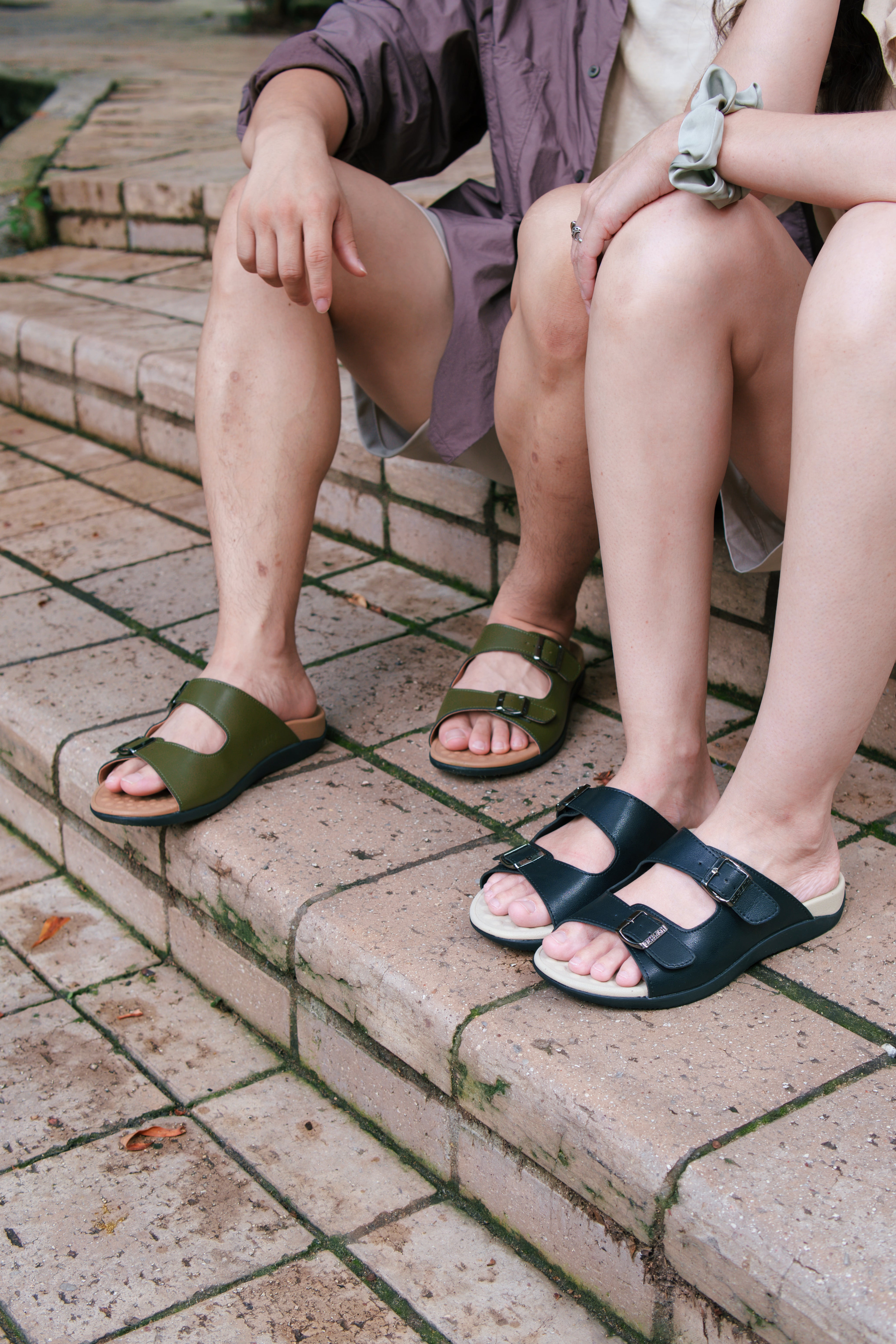
Can Diabetic Patients Use Arch Support Sandals?
Can Diabetic Patients Use Arch Support Sandals?
Short answer: Most diabetic patients can and should use arch support sandals, with important caveats. Diabetic patients with peripheral neuropathy (nerve damage causing reduced foot sensation) need footwear with smooth interiors, no seams, and pressure-distributing soles. Arch support reduces the plantar pressure hotspots that cause diabetic foot ulcers. Patients with active ulceration or severe deformity require specialist diabetic footwear — consult a podiatrist.
Why Foot Health Is Critical for Diabetics
Diabetes damages small blood vessels and nerves in the feet over time. Peripheral neuropathy — reduced or absent sensation in the feet — means diabetic patients cannot feel pain from poorly fitting shoes, developing blisters, or pressure wounds. Combined with reduced circulation (peripheral arterial disease), even minor foot injuries can become serious, slow-healing ulcers.
In Malaysia, diabetes is among the highest in Southeast Asia — estimated 18.3% of adults (2019 National Health and Morbidity Survey). Diabetic foot complications are a leading cause of non-traumatic lower limb amputation in Malaysia. Appropriate footwear is not cosmetic — it is a medical necessity for diabetic patients.
What Diabetic Patients Need in Footwear
Pressure distribution: The most important feature. Areas of high plantar pressure are where ulcers form. Arch support redistributes pressure away from the heel and metatarsal heads (the most common ulcer sites) by engaging the arch as a load-bearing surface. This pressure redistribution is clinically beneficial for diabetic patients.
Smooth interior surface: No seams, rough textures, or embellishments inside the shoe. Neuropathic patients cannot feel a seam rubbing — but it can cause a wound over hours. Look for sandals with smooth, even footbeds.
Adequate toe room: A wide toe box prevents toe-to-toe friction wounds in patients who cannot feel toe crowding. Never wear pointed-toe shoes with diabetes.
Secure fit: Loose sandals that slip during walking cause friction. Adjustable straps that secure the foot in place prevent this.
Cushioning: Additional cushioning reduces mechanical trauma to the compromised foot tissue. The dual-density EVA in OZHealth PosturArch provides this cushioning alongside arch support.
When to Seek Specialist Diabetic Footwear
Some diabetic patients require specialist prescription diabetic footwear rather than quality commercial footwear: those with Charcot arthropathy (severe joint destruction from neuropathy), active or recurrent plantar ulcers, significant foot deformity (such as severe hammertoes or bunions), or previous amputation. For these patients, off-the-shelf orthotic sandals are insufficient — see a podiatrist for prescription footwear assessment.
For diabetic patients without these complications, quality orthotic sandals appropriate for neuropathic foot protection represent a good daily footwear choice. Always inspect both feet daily for any redness, blisters, or skin breaks — and see a podiatrist or diabetic foot specialist if any wound develops.
Malaysian Diabetic Foot Resources
The Malaysian Diabetes Association and Hospital-based Diabetic Foot Clinics at major government hospitals (HUKM, HKL, Hospital Putrajaya) provide specialist diabetic foot care. Patients with diabetes should have annual foot assessments by a healthcare professional regardless of symptom presence.