
Best Footwear for Malaysian Office Workers — A Podiatrist's Guide
Best Footwear for Malaysian Office Workers — A Podiatrist's Guide
Short answer: Malaysian office workers need footwear that handles two very different environments: outdoor commuting and indoor office use. For women, low heeled shoes (under 4cm) with arch support are preferable to flat ballet flats or high stilettos. For men, leather or synthetic shoes with firm midsole support are recommended. Both should add orthotic sandals for home recovery time after commuting.
The Malaysian Office Worker's Foot Problem
Malaysian office workers face a specific pattern of foot stress: commuting on foot to public transport (often significant walking in heat), sitting for 6–8 hours (reducing circulation and stiffening the Achilles), and then commuting home. The feet receive concentrated stress in short intense bursts — particularly at commute times — without the distributing effect of consistent movement.
Common presentations I see in office workers: plantar fasciitis (often triggered by walking in unsupportive shoes during a longer-than-usual commute), metatarsalgia (ball of foot pain from high heels compressing the forefoot), and posterior tibial tendon strain from pronation in flat ballet flats.
For Women: Navigating Office Dress Codes
Heels: The sweet spot for heel height in office settings is 2–4cm. This provides slight Achilles relief while not radically shortening the tendon or shifting weight forward. Above 6cm, the risks (forefoot compression, balance issues, long-term Achilles shortening) outweigh any aesthetic benefit. If high heels are required for formal occasions, carry flat supportive shoes for the commute and switch at the office.
Flat ballet flats: Often worse than low heels because they have zero arch support and zero heel cushioning. The thin, flexible sole provides no shock absorption. A 2cm heel with some arch support is significantly better for foot health than a flat ballet flat.
Wedge heels: Better than stilettos because weight is distributed more evenly. Still needs arch support in the footbed.
Best choice: Low court shoes or Mary Janes (2–4cm heel) with a firm midsole and removable insole — allows adding custom orthotics if needed.
For Men: Office Dress Shoe Realities
Most men's dress shoes have inadequate cushioning and arch support. The leather outsole provides no shock absorption; the narrow toe box can cause toe crowding over time. Key recommendations:
- Choose shoes with a slight heel (2cm) rather than completely flat
- Use quality insoles inside dress shoes — many quality brands allow insole insertion
- Rotate between at least two pairs of dress shoes to allow full drying and sole recovery
- Avoid completely rigid leather soles for daily commuting — a rubber heel gives better shock absorption
The At-Home Recovery Strategy
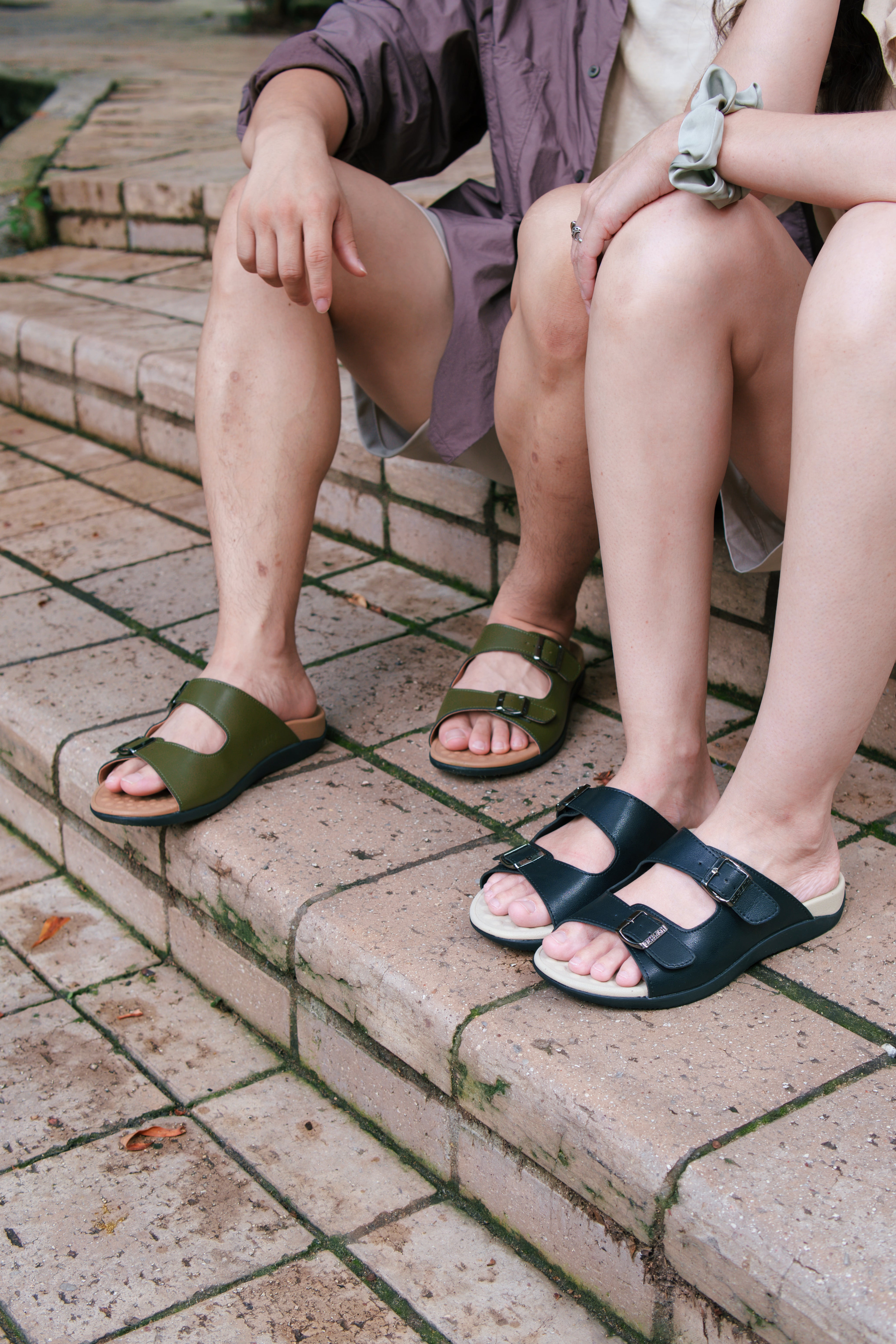
The most commonly overlooked element: what office workers wear at home matters as much as what they wear to work. Coming home and removing all footwear on hard tile floors for 3–4 hours undoes the supportive benefit of the day's footwear. Orthotic sandals for home use — like OZHealth PosturArch — maintain arch support during home hours and significantly reduce the cumulative daily stress that leads to plantar fasciitis.
Standing Desks in Malaysian Offices
Standing desks are increasingly common in Malaysian corporate environments. Standing desk users need more supportive footwear than sedentary workers — the stress profile is closer to standing work than desk work. Anti-fatigue mats plus orthotic footwear is the evidence-based combination for standing desk users.