
Are Orthotic Sandals Better Than Insoles for Foot Pain?
Are Orthotic Sandals Better Than Insoles for Foot Pain?
Short answer: For Malaysians, orthotic sandals are often more effective than insoles because they provide support in the environments where Malaysians spend the most time barefoot — at home, in casual settings, and in sandal-appropriate climates. Insoles only work inside closed shoes. The best solution combines both: insoles for work shoes and orthotic sandals for home and casual wear.
What Insoles Do (and Don't Do)
Insoles (also called orthotics or arch supports) are removable inserts that fit inside existing shoes. They redistribute pressure, support the arch, and modify foot posture. Quality insoles — whether custom or over-the-counter — can significantly reduce plantar fasciitis, flat feet symptoms, and heel pain.
The limitation: insoles only provide support when you're wearing closed shoes. In Malaysia, this covers work and outdoor environments but excludes the significant time spent barefoot at home on hard tile floors. Insoles sitting in your shoes provide zero benefit during home hours.
What Orthotic Sandals Provide
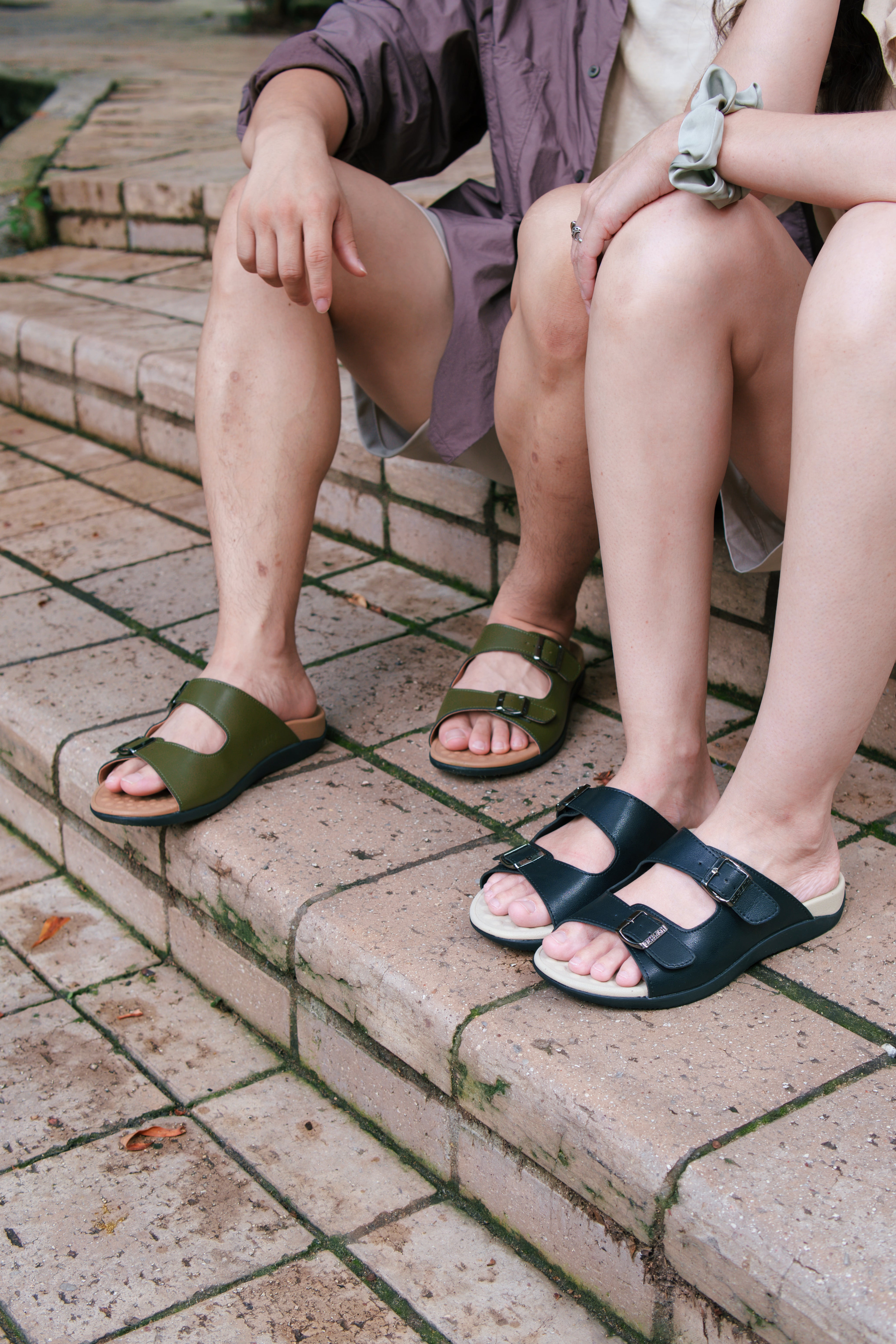
A purpose-built orthotic sandal integrates arch support, heel cup, and cushioning directly into the sandal structure. Unlike a removable insole, the support cannot slip, compress unevenly, or be forgotten. Key advantages for Malaysian lifestyles:
- Worn at home where barefoot time on tiles is high risk for plantar fasciitis
- Appropriate for Malaysia's warm climate — more breathable than closed shoes with insoles
- No need to transfer insoles between shoes
- Consistent support without wear degradation of the insole over time
Clinical Comparison: Support Effectiveness
A well-designed orthotic sandal like OZHealth PosturArch provides equivalent arch support to a good-quality over-the-counter insole, but with additional advantages: a deep heel cup that is architecturally part of the shoe (not added on top of a flat footbed) and a dual-density sole that provides both support and cushioning in a single structure.
Custom orthotics from a podiatrist remain the gold standard for severe or specific biomechanical conditions. For mild to moderate arch issues, quality orthotic sandals are clinically appropriate and significantly more practical for daily Malaysian life.
The Practical Malaysian Recommendation
My recommendation for most Malaysian patients with foot pain: use quality insoles in work shoes for the work day, and switch to orthotic sandals when at home. This provides continuous arch support across the full day — not just during work hours. Total daily unsupported time should be minimised, particularly for those with plantar fasciitis or flat feet.
Cost comparison: good quality over-the-counter insoles cost RM80–200 and last 6–12 months. A quality orthotic sandal costs RM200–400 and lasts 2–3 years. Both represent better value than chronic foot pain treatment.