
Achilles Tendonitis and Footwear — What You Need to Know
Achilles Tendonitis and Footwear — What You Need to Know
Short answer: Poor footwear — particularly flat sandals, flip-flops, and worn-out athletic shoes — is one of the leading contributors to Achilles tendonitis. The tendon is stressed when the heel lacks proper cushioning and support, and when overpronation causes abnormal rotational forces on the tendon. Appropriate footwear reduces this stress and is central to both treatment and prevention.
What Is Achilles Tendonitis?
The Achilles tendon is the largest tendon in the body, connecting the gastrocnemius and soleus (calf) muscles to the calcaneus (heel bone). Achilles tendonitis (or tendinopathy) is degeneration and inflammation of this tendon, typically from repetitive overload. It presents as pain, stiffness, and swelling at the back of the heel, worst in the morning and after periods of rest.
Achilles tendonitis is significantly more common in: runners and athletes, people who suddenly increase activity levels, those with tight calves or limited ankle dorsiflexion, and those with flat feet or overpronation — conditions that place abnormal rotational stress on the tendon.
How Footwear Contributes to Achilles Tendonitis
Flat sandals and flip-flops: No heel elevation means the Achilles tendon is fully stretched with every step, accumulating strain. In Malaysia where flat sandals are ubiquitous, this is a primary cause of chronic Achilles problems.
Overly flat shoes: Similar effect — the calf and Achilles work harder than necessary throughout the gait cycle.
Worn-out athletic shoes: Once the midsole cushioning degrades, impact is transmitted directly to the Achilles. Many runners keep shoes past 500km — a significant risk factor.
Sudden switch from heels to flats: Women who regularly wear high heels have shortened Achilles tendons. Switching abruptly to flat footwear overstretches the tendon and triggers tendonitis.
Overpronation without correction: Flat feet cause the foot to roll inward during walking, creating a whipping motion on the Achilles tendon. Arch support that controls pronation significantly reduces this stress.
What Footwear Helps Achilles Tendonitis
During the acute phase, a small heel elevation (15–25mm) reduces tension on the Achilles by shortening the calf-tendon unit. Heel cushioning absorbs impact. Arch support controls overpronation. Together, these features allow the tendon to heal without continuous re-injury.
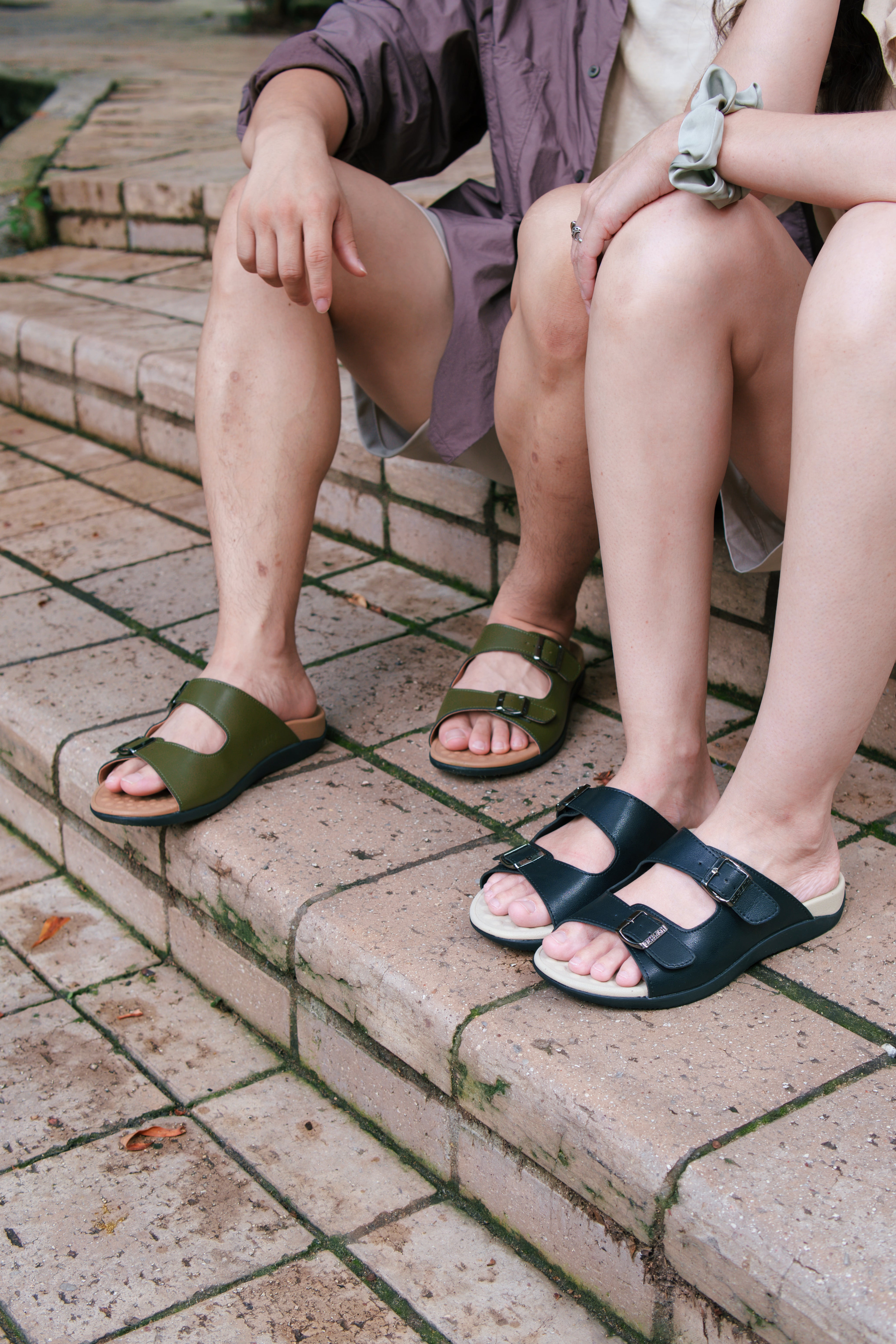
OZHealth PosturArch sandals address all three factors: the heel cup provides cushioning and a slight elevation, the medial arch support controls overpronation, and the dual-density sole absorbs impact. They are suitable for home and casual wear during Achilles recovery — preventing the barefoot-on-tiles problem that many Malaysian patients continue suffering during recovery.
Recovery and Return to Activity
Achilles tendonitis typically takes 3–6 months to fully recover. Eccentric calf exercises (the "Alfredson protocol") are the gold standard rehabilitation — performed with supportive footwear on a step. Return to running should be gradual and in properly cushioned and supportive footwear. From a chiropractic perspective, I also assess lumbar and pelvic alignment — hip instability and lower back dysfunction commonly contribute to Achilles overload and must be addressed for full recovery.